
Two suppliers can quote the same zinc alloy die casting drawing and return prices that look far apart. That does not automatically mean one supplier is expensive or the other has made a mistake. Often the suppliers have priced different work: one includes tooling revisions and thread tapping, another assumes a raw casting; one prices a visual finish and protective packing, another leaves both open. A useful zinc alloy die casting quote starts with a scope that both purchasing and engineering can compare.
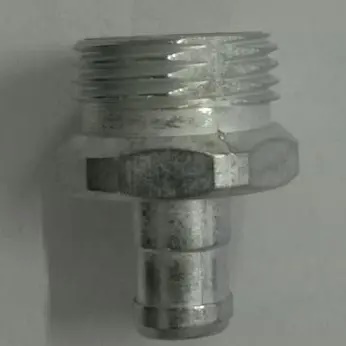
Zinc alloy die casting is often chosen for small, detailed components with features that would be costly to machine from solid material. The quotation therefore has two layers. The first is the one-time work needed to turn a drawing into a repeatable process: DFM review, tooling design, die manufacture, trials and sample correction. The second is the repeat cost of producing each approved part: alloy, casting cycle, trimming, secondary work, finishing, inspection, packing and any special handling.
When those layers are mixed into one unexplained number, it is difficult to judge a quote or negotiate changes later. Asking a supplier to show the scope behind the price is more useful than asking for the lowest figure first.
An RFQ does not need to be long, but it should remove the assumptions that create price gaps. The table below is a working checklist for a zinc alloy component, cover, handle, connector, fitting or other precision casting.
| RFQ item | What to provide | Why it affects the quotation |
|---|---|---|
| Part geometry | 2D drawing with dimensions and tolerances, plus STEP, IGS or other 3D file where available | Determines die structure, slides, ejector layout, draft review and post-casting work |
| Alloy and function | Specified zinc alloy if fixed, along with strength, appearance, conductivity or assembly purpose | Prevents a quote from being based on an unsuitable default material or finish |
| Annual and release quantity | Expected annual volume and the typical order quantity | Changes die life planning, setup allocation, material purchasing and unit-cost assumptions |
| Secondary operations | Threads, drilling, reaming, CNC faces, deburring or assembly inserts marked on the drawing | Raw-casting pricing can be very different from a ready-to-assemble part |
| Finish requirement | Natural finish, polishing, plating, painting, coating, color, masking or cosmetic standard | Defines preparation, external-process scope, handling and inspection requirements |
| Critical acceptance points | Sealing surfaces, thread gauges, cosmetic zones, flatness, hole position and any functional no-defect areas | Sets the inspection method and avoids a late disagreement over what the sample must prove |
| Packing and shipment | Bulk, partitioned trays, individual protection, labeling and destination requirements | Visible or plated parts can need substantially different protection from ordinary hardware |
For a new project, request at least three numbers or clearly labelled sections: tooling and development cost, sample-stage charges if applicable, and production unit price at the expected order quantities. Tooling is not simply a mold block. Complex parts may need slides, cores, inserts, trimming tools, gauges or dedicated fixtures. The actual requirements follow the geometry, tolerances and production plan.
Separating these items helps a buyer make a better decision. A higher upfront tool cost can be reasonable if it reduces manual work, stabilizes a critical feature or supports the intended production volume. Conversely, a low tooling offer that excludes a required trim tool, thread operation or inspection fixture may become expensive after samples start.
For repeat orders, a comparable unit price should identify what condition the part is supplied in. The following matrix gives purchasing teams a practical way to ask the right follow-up questions.
| Cost area | Question to ask | Common comparison mistake |
|---|---|---|
| Die casting | Does the price include alloy, casting, trimming and normal runner handling? | Comparing a raw casting with a finished casting |
| Machining and threads | Which holes are cast, drilled, tapped, reamed or inspected by gauge? | Assuming a threaded feature is included because it appears on the drawing |
| Surface finish | Is the quote for as-cast condition, polishing, plating, coating or paint? | Not defining appearance, color reference or masking areas |
| Quality control | Which dimensions, threads, cosmetic criteria or functional tests are included? | Requesting a tight result without identifying the inspection evidence |
| Packaging | Will parts touch each other, or are separators required for visible surfaces? | Receiving a good part with transit scratches or mixed lots |
| Logistics terms | Are the prices EXW, FOB, delivered, or based on another agreed term? | Comparing product price without matching the delivery basis |
A small part is not necessarily a simple part. A compact zinc casting can contain thin walls, fine ribs, logo detail, concealed slides, polished visible surfaces, threaded holes or a mating feature that must align with plastic and metal components. These features may have little effect on the overall weight but a large effect on tooling and secondary operations.
It also helps to distinguish a cosmetic requirement from a functional one. A polished front surface, a protected electrical contact point and a concealed internal wall do not need the same control plan. Marking those zones on the drawing or a reference photo gives the supplier a more accurate basis for both DFM feedback and price.
Imagine a small zinc alloy enclosure with four mounting holes, two tapped holes, a plated visible face and an internal locating feature. A quote cannot be meaningfully compared until the buyer confirms whether the mounting holes are cast or drilled, whether the tapped holes need a go/no-go gauge, what plating specification applies, and whether the locating feature is a controlled datum. Without those answers, an apparently lower price may exclude the very work needed for the assembly.
For this reason, do not send a competitor price and ask another supplier simply to match it. Ask both suppliers to confirm the same production condition. The result is more transparent and gives engineering a chance to resolve costly design assumptions before tooling is released.
A preliminary quote is appropriate when the design is still moving and the buyer needs a budget range. At that stage, send the best available 3D model, estimated annual volume, intended alloy and a note that the geometry is preliminary. The supplier can then flag major cost drivers such as slides, wall transitions, finish assumptions or machining requirements.
A firm production quote should follow a controlled drawing revision. It should identify the alloy, quantity breaks, finishing standard, critical dimensions, inspection expectations, packaging and commercial delivery term. If the part will be used in an assembly, include the mating-part relationship or a photo of the assembly where it helps clarify function.
The best quotation request gives both sides a shared production brief. It does not need a complicated cost spreadsheet from the buyer. A drawing, a 3D file, quantity information, finish requirement, critical-feature list and packing expectation are enough to begin a serious conversation. The supplier can then respond with DFM questions rather than guessing what the part must achieve.
Related references: custom zinc alloy die casting parts for small precision components, zinc die casting processing, die casting manufacturing capabilities and OEM die casting project service.
A photo can support an early discussion, but it cannot reliably define tooling, tolerance, threads, material or finish. Use it for context and provide a drawing or 3D file before requesting a production price.
For decision making, it is clearer to show tooling separately and list the volume assumptions behind the unit price. A buyer can then compare one-time investment and repeat cost without hiding either.
Late clarification of machining, finish, tolerances, inspection or quantity is a common cause. A controlled RFQ revision reduces that risk.
Тел:+86 18868921505
Электронная почта:lijianguo@cxhuabo.com
Адрес: Y iheng road, город Чанхэ, город CI, Нингбо, провинция Чжэцзян, Китай

Сканировать Вичат
Авторские права © 2022 Cixi Huabo Machinery Co., Ltd.
Карта сайтаЭтот веб-сайт использует файлы cookie, чтобы обеспечить вам максимально эффективное использование нашего веб-сайта.

 English
 Español
 Français
 日本語
日本語



 WhatsApp
 телефон
Комментарий
(0)